

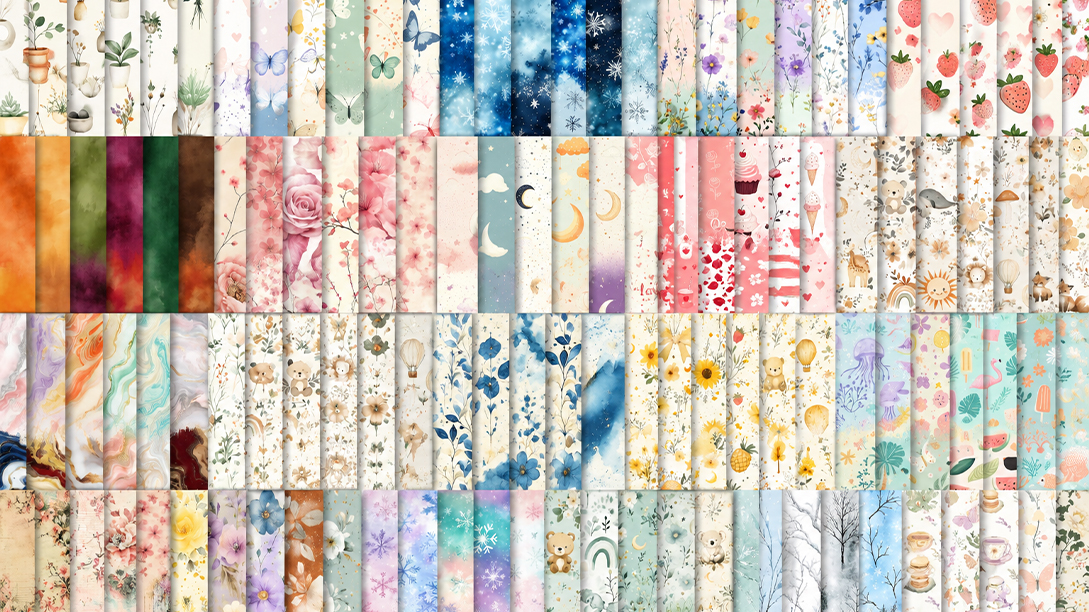
A Designer’s Toolkit of Digital Papers
There is something slightly addictive about collecting digital papers.
One minute you are looking for a simple cream notebook texture and suddenly you have a folder packed with crinkled parchment, painted florals, cloudy watercolour washes, faded ledger pages, tiny stars, dusty pink linen textures, and fifteen variations of torn paper edges you absolutely needed for a journal spread at two in the morning.
After years of making digital journals, printable kits, collage pages, and sketchbook layouts, I can confidently say this: good digital papers quietly carry the entire piece.
People notice the illustrations first. Maybe the lettering. Sometimes the stickers. But the paper underneath is what creates warmth. It gives the page a heartbeat. Without it, everything can feel strangely flat, like furniture sitting in an empty room.
The funny thing is, most beginners start with decorations when they really should start with paper.
A good paper texture does half the work for you.
What Digital Papers Actually Do
Digital papers are not just backgrounds sitting politely behind your artwork. They create atmosphere.
A soft cotton texture can make a journal page feel calm and thoughtful. A scratched vintage paper instantly adds age and character. Tiny speckles and faded fibres trick the eye into seeing something tactile, even through a screen.
That little illusion matters more than people think.
When I build a journal spread, I usually start with paper before anything else. The paper decides the mood. Warm toned handmade textures tend to feel nostalgic. Clean white grid papers feel organised and fresh. Dark moody textures completely change how colours behave on the page.
Certain paper packs become favourites very quickly. You end up reaching for the same worn notebook textures like an old paintbrush that somehow works better than the expensive new ones.
Most digital artists also build collections over time rather than relying on one style. Having a small library of papers ready to go saves an unbelievable amount of creative energy. Instead of hunting for the “right look” every single time, you already have textures and tones that feel like you.
And honestly, half the fun is collecting them.
The Papers I Reach for Constantly
Every artist has their staples. Mine are usually split into a few dependable categories.
Neutral Basics
These are the quiet heroes.
Soft beige paper. Faded ivory. Light grey fibres. Notebook textures with barely visible grain. Subtle grid papers.
Not flashy. Not dramatic. Completely essential.
These papers work beautifully when you want stickers, handwriting, or illustrations to take centre stage without competing for attention.
I probably use neutral papers more than anything else in my toolkit because they layer so easily with stronger elements.
Vintage Papers
This category is dangerously easy to become obsessed with.
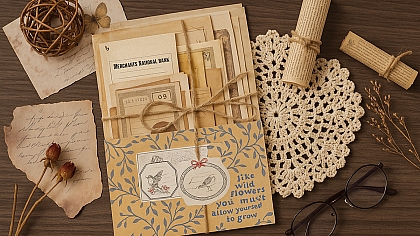
Old receipts, aged book pages, distressed parchment, faded ink marks, tea stained textures, antique floral scraps.
Vintage papers add instant storytelling. Even a very simple journal page suddenly feels collected and personal, almost like something discovered inside an old memory box.
The trick is restraint.
Too many distressed textures at once can make a page feel noisy. One or two layered carefully usually creates the best effect.
Painted and Artistic Textures
These are the papers that save creative blocks.
Watercolour blooms, acrylic streaks, messy paint smudges, charcoal marks, handmade brush textures.
When a layout feels stiff or overly polished, adding an imperfect painted paper underneath immediately loosens everything up. It gives digital work a human feel again.
I keep entire folders dedicated to rough textures because perfection gets boring very quickly in digital art.
Seasonal and Themed Papers
These are the ones that tempt you into starting entirely new projects you definitely did not plan on making.
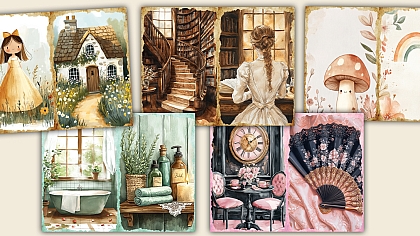
Autumn collections with deep browns and muted oranges somehow convince me I need another reading journal every September. Celestial papers covered in tiny moons and faded constellations practically beg to become dream diaries. Botanical sets always end up inside recipe books, garden journals, or cosy planner pages covered in handwritten notes.
Themed collections are especially useful when you want a project to feel cohesive without overthinking every detail. Once the papers share similar colours and textures, the entire layout naturally feels connected. You can throw together scraps, photos, labels, and handwriting quite casually and it still looks intentional.
That is one of those small secrets experienced digital artists eventually learn. A strong foundation makes everything layered on top behave better.
I also think themed paper packs remove some of the pressure from creating. Instead of staring at a blank canvas wondering where to begin, you already have a mood sitting in front of you. Sometimes that little push is all creativity needs.
How Digital Papers Change a Journal Page
A plain white digital canvas can feel oddly intimidating. It has the same energy as walking into a completely empty apartment. Technically there is potential everywhere, but it does not feel welcoming yet.
Paper changes that immediately.
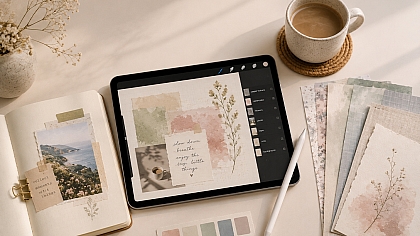
Even adding one lightly textured background suddenly gives your brain something to respond to. The page starts feeling lived in. Softer. More touchable. That is usually when ideas begin appearing naturally.
I notice this especially with digital journalling. People often try to recreate perfectly polished scrapbook pages they see online, but the most charming journal spreads usually contain imperfections. Crooked layering, slightly messy textures, faded edges, overlapping papers that look casually placed rather than mathematically aligned.
Good digital papers help create that relaxed feeling without much effort.
They also make colours behave differently. Soft cream papers warm everything placed on top of them. Dark textured backgrounds make gold accents glow beautifully. Watercolour papers absorb colours visually in a way smooth papers simply cannot.
It is subtle, but subtle details are usually what separate a decent layout from one people save for inspiration.
Another thing nobody mentions enough is how useful digital papers are for speeding up workflows. Once you build a reliable collection, creating becomes faster because you are no longer starting from nothing every time. You already know which textures work for soft journals, which papers suit vintage collages, which backgrounds make handwriting stand out properly.
After a while, your paper collection becomes part of your artistic voice. People begin recognising your style through colour palettes and textures before they even notice the artwork itself.
Building a Paper Collection You Will Actually Use
One mistake I made early on was downloading absolutely everything.
Huge bundles. Random textures. Papers I thought I might use someday. My folders became chaos very quickly, and instead of feeling inspired, I spent half my creative time searching for files.
A smaller, thoughtfully chosen collection works far better.
Start with papers that feel versatile. Neutral textures, soft handmade fibres, lightly distressed vintage pages, and a few artistic painted backgrounds will carry you through hundreds of projects. Once those basics are in place, themed collections become much more enjoyable because you already have reliable staples underneath them.
Organisation also matters more than people admit. Naming folders by colour, season, or texture style saves an unbelievable amount of frustration later on, especially when inspiration arrives at inconvenient hours and your brain suddenly decides it urgently needs “that dusty rose paper with the faint gold speckles.”
Creative people will understand exactly what I mean.
At the end of the day, digital papers are not just decorative extras sitting underneath stickers and lettering. They shape the mood of a page. They soften harsh digital spaces and make artwork feel personal, layered, and alive.
A thoughtfully built paper toolkit becomes something you reach for instinctively, almost like favourite paints spread across a studio table. And once you find textures that truly suit your style, creating starts feeling less like arranging elements on a screen and more like building little worlds of your own.
LEAVE A COMMENT

0.0658