

5 Ways to Use Sunflower Ephemera in a Junk Journal
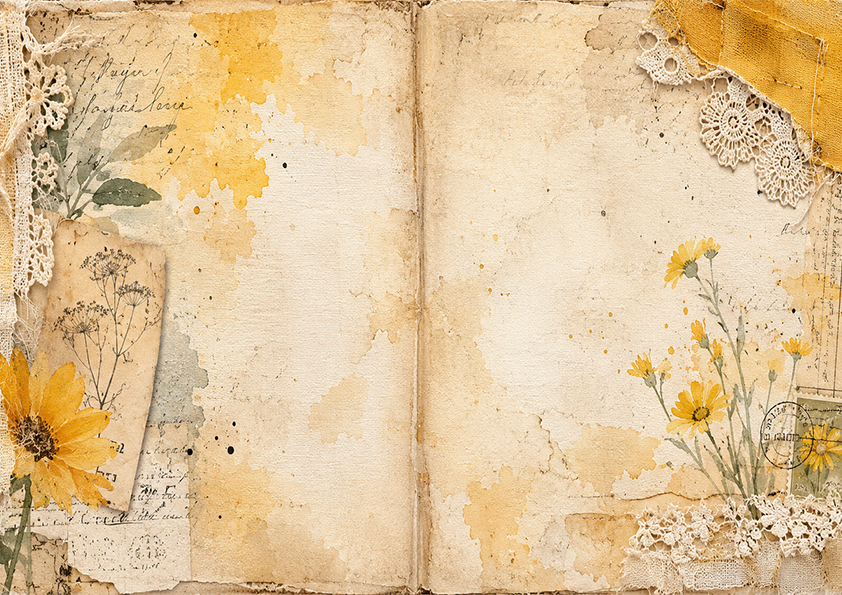
Free Sunflower Printable: If you would like something to get started with, I have a free double page sunflower printable that you can download and use in your own junk journals. It is perfect for pockets, tags, clusters and collage pages.
Sunflowers have a way of bringing warmth into a journal without needing much else around them. Their rich golden petals, earthy centres and natural textures fit beautifully with aged book pages, handwritten documents and all those little bits of ephemera we collect throughout the year. As summer begins to fade, they feel right at home in journals that celebrate the changing seasons.
One of the things I enjoy most about sunflower themed projects is how versatile they are. You can keep the colours bright and cheerful or tone them down with tea dyed papers, soft lace and vintage labels for a more timeworn look. Either way, sunflower ephemera can become the focal point or simply add a touch of colour where a page needs it.
Here are five simple ways I like to use sunflower ephemera in my own junk journals.
Build Layered Journal Clusters
Clusters are one of the easiest ways to use sunflower ephemera because they can be made ahead of time and tucked into almost any project. I often spend an afternoon making several at once, using whatever scraps are already on my desk. It is a satisfying way to use those smaller pieces that are too lovely to throw away but not quite large enough for a full page.
I usually begin with something plain as the base. A torn book page, a piece of ledger paper or a small section of cardstock works well because it gives the other layers something to sit on. From there I add texture with a piece of cheesecloth, lace or a fabric offcut before placing the sunflower image on top.
Once the main image is in place, I keep the finishing touches fairly simple. A vintage ticket, a tiny label, a postage stamp or even a small wooden button is often enough. There is no need to cover every inch of the cluster. Leaving a few edges visible gives each layer room to breathe and helps the sunflower remain the centre of attention.
One thing I have learnt over the years is not to line everything up perfectly. Slightly uneven edges and natural looking layers give a cluster far more character than perfectly straight lines. Handmade journals should feel relaxed and personal, not overly polished.
A little tip: Some of my favourite clusters are also the smallest. They are perfect for filling an empty corner of a page or adding interest beside a journal card without making the spread feel too busy.
Make Decorative Pockets
Pockets are both practical and decorative, which is probably why I include them in almost every journal I make. A sunflower printable can easily become a side pocket, a corner tuck or even a full page pocket with very little effort.
If the sunflower image fills the entire pocket, I like to soften it slightly by inking the edges with a warm brown ink. It takes away the bright white cut edge and helps the piece blend naturally with older looking papers. A line of stitching around the outside also adds a lovely handmade touch, although it looks just as nice without it.
Inside the pocket, I usually tuck a journal card made from coordinating papers rather than another bold floral print. Too many large flowers together can compete with each other, so I prefer using ledger paper, vintage handwriting or lightly stained cardstock for the inserts. The sunflower then becomes the feature while everything else quietly supports it.
You can also decorate the front of the pocket with a tiny label or a short piece of torn book text, but I try not to overdo it. Sometimes the sunflower image says everything that needs to be said.
A little tip: Leave a small border around your sunflower image instead of trimming right to the edge. That little frame helps draw the eye straight to the flower and gives the finished pocket a softer, more balanced look.
Create Beautiful Journal Tags
Journal tags are one of those pieces I always make in batches. Once the papers and supplies are out, it takes very little extra time to create half a dozen instead of just one. They can be tucked into pockets, tied onto pages or even used as bookmarks until the journal is finished.
For sunflower tags, I like to let the image take centre stage and keep everything around it fairly understated. A vintage style sunflower paired with faded papers has a timeless feel that works in almost any journal.
Some of my favourite layers include:
- Old book pages
- Dictionary paper
- Music sheets
- Ledger paper
- Tea dyed cardstock
- Vintage handwriting
- Small pieces of lace
Rather than stacking every layer directly behind the flower, I let corners peek out from different directions. It creates movement without making the tag feel bulky.
To finish the top of the tag, I usually reach for natural fibres.
Good choices include:
- Jute twine
- Cotton string
- Torn fabric strips
- Hand dyed seam binding
- Soft ribbon in cream, olive or warm brown
A tiny word label or a short quote is often all a tag needs. I avoid covering too much of the sunflower because that image is usually what caught my eye in the first place.
A little tip: Keep a small basket of finished tags near your work area. They are wonderful for filling empty pockets whenever a journal feels like it needs one final detail.
Add Interest to Collage Pages
Collage pages are a wonderful place to use smaller sunflower pieces that would otherwise sit forgotten in a drawer. Tiny cut outs can be just as effective as one large focal image, especially when they are repeated across the page.
Instead of placing everything in one area, I spread the elements naturally around the layout. Your eye moves from one detail to the next, making the page feel balanced without looking too planned.
Sunflowers pair beautifully with natural elements such as:
- Bees
- Butterflies
- Botanical labels
- Ferns
- Wild grasses
- Pressed leaves
- Seed packet images
These combinations have a lovely late summer feel that works beautifully in rustic journals.
Colour is just as important as the images themselves. Because sunflowers are naturally bright, I like to surround them with softer tones.
Some of my favourite background papers are:
- Tea dyed paper
- Kraft paper
- Old ledger pages
- Cream cardstock
- Lightly stained book pages
- Faded script paper
The quieter background allows those golden touches to stand out without becoming overwhelming.
One trick I use often is repeating small hints of yellow in different places across the page. That might be a tiny ticket, a stitched fabric scrap or a printed label. These little touches connect everything together without making the design feel repetitive.
A little tip: When you think the page is finished, put it aside for ten minutes before adding anything else. More often than not, you will come back and realise it needed less rather than more.
Tuck Sunflowers into Hidden Details
Not every sunflower has to be the star of the page. Some of the nicest details are the ones people notice only after spending a little time with the journal.

These small surprises make handmade journals feel personal and encourage someone to slow down as they turn each page.
Places where I often add sunflower details include:
- Inside flip outs
- Behind fold out pages
- On envelope flaps
- Tiny page tabs
- Hidden journaling cards
- Belly bands
- Small tuck spots
- Miniature tags
A tiny sunflower seal on an envelope flap can be just as charming as a full page collage. Likewise, a little floral tab peeking from the edge of a page adds colour without taking over the layout.
These finishing touches also help carry the sunflower theme throughout the journal. Rather than having one or two heavily decorated pages, the flowers appear naturally from beginning to end, creating a sense of continuity that ties the whole journal together.
A little tip: Before you call a journal finished, flip through every page one last time. If you spot an area that feels a little plain, a tiny sunflower embellishment is often all it needs.
Final Thoughts
Sunflower ephemera is one of those collections I reach for year after year. It works just as well in a rustic harvest journal as it does in a soft botanical theme, and it blends effortlessly with so many of the papers and embellishments most of us already have in our craft rooms.
One of the biggest mistakes I see is trying to use every sunflower image on a single page. Giving each piece a little space allows the colours and details to stand out naturally. A few carefully chosen elements nearly always have more impact than a page filled from edge to edge.
If you are building a sunflower themed journal, think about mixing different textures as well as different papers. A combination of smooth cardstock, aged book pages, lace, fabric, stitching and natural fibres gives every spread a little more depth and makes the journal feel inviting to handle.
It is also worth keeping a small folder just for sunflower scraps. Even the tiniest offcuts can become:
- Journal tabs
- Mini clusters
- Decorative seals
- Layered labels
- Pocket embellishments
- Tag toppers
- Tiny tuck spots
I have found that these smaller pieces often become my favourite finishing touches because they fit into places where a larger embellishment would feel too heavy.
Most of all, have fun with the process. There are no rules that say a sunflower journal has to be bright yellow from cover to cover. Try pairing your flowers with muted greens, faded blues, warm browns or soft creams. Add vintage handwriting, old photographs or botanical sketches. Every combination creates a slightly different mood, and that is what makes junk journalling such a rewarding hobby.
Which idea will you try first?
Do you enjoy making layered clusters, decorative pockets or journal tags? I would love to know how you use sunflower ephemera in your own journals. Share your favourite ideas in the comments and you might even inspire someone else's next project. 🌻
LEAVE A COMMENT
Recent Posts


0.0658